
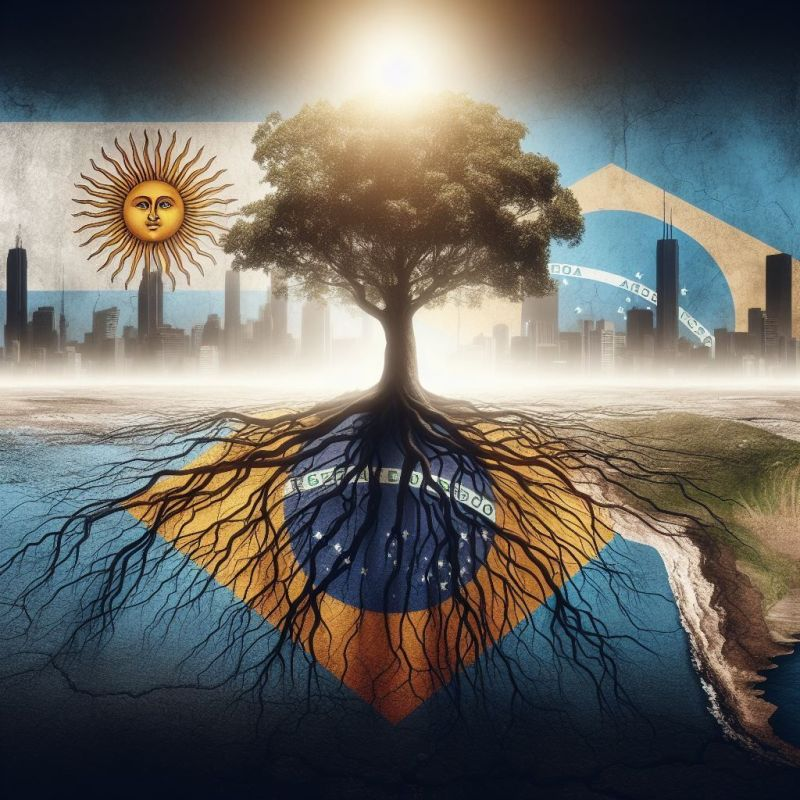

Living in another country is like transplanting a tree without its roots. You bring all your structures, experiences, and ways of thinking into a new context where they don’t necessarily make sense. Everyone else shares invisible threads — the collective memories of having grown up in the same place. And it’s not just the big things. It’s the small ones too: the actress from 20 years ago now on TV, the song that played at every party in the 2000s, the soap opera that everyone still remembers. For a newcomer, these are blank spaces.
Another country is like a forest connected by intertwined roots of collective memory. Smiles, greetings, words—even false friends in the language—don’t always mean what you think they mean. (Tip: in Brazil, don’t say a dish was “exquisite,” it won’t land the way you expect!)
Over time, I realized: my old frames of reference no longer worked. I had to become a cultural apprentice. After 35 years of being “Argentinian,” that was no small challenge. And my first teacher in Brazil was… samba.
At first, samba was just a music style to me—something you hear in a bar. But when I stepped into a bloco de samba with an instrument in hand, everything changed. Samba is not just music. It’s culture. It’s a fire in the middle of the forest, where people gather, forget their worries, and become part of a circle of belonging. In that circle, there are no social classes or divisions—only rhythm, joy, and connection.
What did I learn? That the best way to embrace a new culture is to go through new experiences, even uncomfortable ones. To listen with fresh ears, ask with genuine curiosity, and accept the hand that others extend. When we change, the way the world sees us changes too.
And what does this mean for organizations? Cultural transformation works the same way. People bring their roots from somewhere else. Leaders need to create bridges—experiences that allow people to internalize new beliefs and behaviors. When we ourselves become apprentices of the new culture, we set the example. Change is always easier when we walk together, hand in hand.
So, what is samba for me now? It’s not just music. It’s a portal. A place where I shed the weight of the week, where worries dissolve into rhythm, where I found my first true root in a new country. Today, samba is part of my story too.